How to Choose the Right Shotcrete Machine for Your Project
Jan 03, 2026
Introduction
A Shotcrete Machine plays a vital role in modern concrete construction, especially in projects such as tunneling, mining, slope stabilization, underground engineering, and structural reinforcement. By pneumatically conveying concrete or mortar and spraying it onto a surface at high velocity, a Shotcrete Machine ensures strong adhesion, high compaction, and efficient application.
However, not all Shotcrete Machines are suitable for every project. Differences in construction environment, spraying method, material properties, and productivity requirements mean that selecting the wrong machine can lead to low efficiency, excessive rebound, frequent breakdowns, and increased operating costs.
This article provides a practical and systematic guide on how to choose the right Shotcrete Machine for your project. By understanding key technical factors and project-specific requirements, contractors and equipment buyers can make informed decisions that improve construction quality and long-term cost efficiency.
1. Understand Your Project Requirements First
Before comparing machine models or technical specifications, it is essential to clearly define your project needs. A Shotcrete Machine should always be selected based on application conditions, not just capacity or price.
1.1 Application Type and Construction Environment
Different construction scenarios place different demands on a Shotcrete Machine.
Tunnel construction requires stable output, long conveying distance, and reliable performance in confined spaces.
Mining projects often involve harsh conditions, abrasive materials, and continuous operation.
Slope stabilization demands mobility, flexible spraying angles, and adaptability to uneven terrain.
Structural repair and reinforcement require precise control and consistent spraying quality.
Environmental factors such as humidity, dust levels, space constraints, and power availability must also be considered. A Shotcrete Machine suitable for an open construction site may not perform well in underground or enclosed environments.
1.2 Dry-Mix vs. Wet-Mix Shotcrete Process
One of the most important decisions is choosing between a dry-mix and a wet-mix Shotcrete Machine.
Dry-mix Shotcrete Machines convey dry materials, with water added at the nozzle. They offer flexibility, longer conveying distance, and easier start-stop operation. Dry-mix systems are widely used in tunnel repair and small to medium projects.
Wet-mix Shotcrete Machines convey pre-mixed concrete. They provide higher output, better concrete consistency, lower dust, and reduced rebound. Wet-mix systems are ideal for large-scale projects requiring high productivity.
Understanding the advantages and limitations of each process helps ensure the selected Shotcrete Machine aligns with project goals and site conditions.
2. Evaluate Key Performance Parameters of the Shotcrete Machine
Once project requirements are clear, the next step is to evaluate the technical performance of different Shotcrete Machines.
2.1 Output Capacity and Spraying Distance
Output capacity determines how much concrete a Shotcrete Machine can deliver per hour. Choosing a machine with insufficient capacity will slow construction progress, while excessive capacity may lead to unnecessary costs.
Key considerations include:
Project size and daily spraying volume
Required spraying speed
Work schedule and labor availability
Spraying distance is equally important, especially in tunnels or deep excavation sites. The Shotcrete Machine must be able to convey materials reliably without pressure loss or segregation.
2.2 Maximum Aggregate Size and Material Compatibility
Each Shotcrete Machine has a maximum allowable aggregate size. Exceeding this limit increases the risk of hose blockage, uneven spraying, and component wear.
When selecting a machine, ensure compatibility with:
Available aggregate size
Cement type and admixtures
Fiber-reinforced or special concrete mixes
Material compatibility directly affects spraying stability and equipment lifespan.
3. Consider Power, Air Supply, and Energy Efficiency
The power and air supply system is the driving force behind any Shotcrete Machine. Inadequate air or power capacity leads to poor spraying performance and frequent interruptions.
3.1 Air Consumption and Compressor Requirements
Compressed air is essential for material conveying and spraying. The air compressor must match the Shotcrete Machine's air consumption requirements in both pressure and volume.
Insufficient air supply can result in:
Poor material flow
Increased rebound
Uneven concrete layers
When choosing a Shotcrete Machine, always evaluate the availability and capacity of the supporting air compressor.
3.2 Drive System and Power Source
Shotcrete Machines are typically powered by electric motors or diesel engines.
Electric Shotcrete Machines are suitable for sites with stable power supply, offering lower noise and maintenance costs.
Diesel Shotcrete Machines are ideal for remote or mobile projects where electricity is unavailable.
Energy efficiency is increasingly important, as it affects long-term operating costs and environmental compliance.
4. Focus on Operation, Maintenance, and Safety
A high-performing Shotcrete Machine should also be easy to operate, maintain, and protect operators from potential risks.
4.1 Ease of Operation and Control System
User-friendly controls improve productivity and reduce operator error. Modern Shotcrete Machines often feature:
Centralized control panels
Adjustable feeding and air parameters
Remote or wireless control options
Simple operation is especially important in high-risk environments such as underground construction.
4.2 Maintenance Requirements and Spare Parts Availability
Maintenance design directly influences downtime and operating cost. A well-designed Shotcrete Machine should offer:
Easy access to wear parts
Simple cleaning procedures
Standardized components
Equally important is the availability of spare parts and technical support. Reliable after-sales service ensures continuous operation and protects long-term investment.
5. Assess Mobility, Durability, and Total Cost of Ownership
Beyond technical specifications, practical considerations often determine whether a Shotcrete Machine is truly suitable for a project.
5.1 Mobility and Installation Requirements
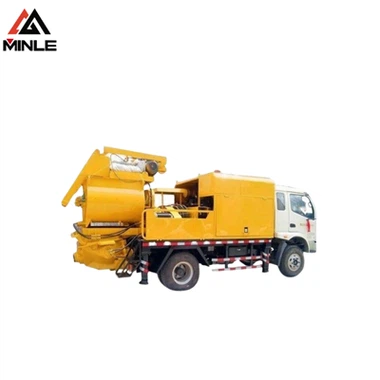
Depending on site conditions, you may need a stationary or mobile Shotcrete Machine.
Mobile machines provide flexibility for slope protection and scattered work sites.
Stationary machines are suitable for fixed tunnel or plant-based operations.
Transportation, installation time, and space requirements should be evaluated in advance.
5.2 Durability and Long-Term Cost Evaluation
Initial purchase price is only part of the total cost. A durable Shotcrete Machine reduces:
Maintenance frequency
Spare parts consumption
Unexpected downtime
Evaluating total cost of ownership helps balance short-term budget constraints with long-term performance and reliability.
Conclusion
Choosing the right Shotcrete Machine is a strategic decision that directly impacts construction efficiency, concrete quality, and overall project cost. By carefully analyzing project requirements, performance parameters, power and air supply, operational factors, and long-term durability, users can select a Shotcrete Machine that truly fits their needs.
A well-matched Shotcrete Machine not only improves productivity but also enhances safety, reduces material waste, and ensures consistent spraying results. With a systematic selection approach, construction professionals can achieve reliable performance and long-term project success.